

Power Flush Middlesbrough
Power flushing to restore central heating efficiency. Removes the sludge, rust, and limescale that cause cold radiators and boiler problems. From £350.
Gas Safe 972035 · Emergency call-outs 24 hours, 7 days
Service Details
- Duration
- 4-6 hours
- Result
- Sludge cleared from the system
- Includes
- Flush, chemicals, inhibitor
- Recommended
- Before new boiler install
Quick answer: A power flush costs from £350 for a typical system and takes 4-6 hours. It’s worth doing if your radiators are cold at the bottom, your boiler is making banging noises, or you’re about to have a new boiler fitted (most manufacturers require it for the warranty).
Power Flushing in Middlesbrough
If your radiators have cold patches, your boiler makes kettling noises, or your heating takes ages to warm up, the cause is usually sludge. Over years of use, central heating systems build up magnetite (black iron oxide), rust and limescale that clog pipes and radiators.
I’m Gas Safe registered (972035) and carry out power flushing across Middlesbrough and Teesside. A power flush clears all of this out so your heating works as it should.
Do You Need a Power Flush?
You probably need a power flush if:
- Radiators are cold at the bottom but hot at the top (sludge settles at the bottom)
- Some radiators don’t heat up at all, even with the valves fully open
- The boiler makes banging or kettling noises (sludge in the heat exchanger)
- The heating is slow to warm up and never quite gets the house warm
- The boiler keeps cutting out or losing pressure
- The water is brown or black when you bleed the radiators
- You’re having a new boiler fitted and want to protect it
If only one or two radiators are giving trouble, you might just need those flushed individually. I can advise once I’ve seen the system.
How Much Does a Power Flush Cost?
| System Size | Price |
|---|---|
| Small (up to 6 radiators) | £350 - £400 |
| Medium (7-10 radiators) | £400 - £500 |
| Large (11-15 radiators) | £500 - £600 |
| Very large (16+ radiators) | From £600 |
The price includes the flush, all chemicals, corrosion inhibitor, and cleaning or fitting a magnetic filter. If your system is heavily contaminated, it may take longer and cost more.
What Happens During a Power Flush
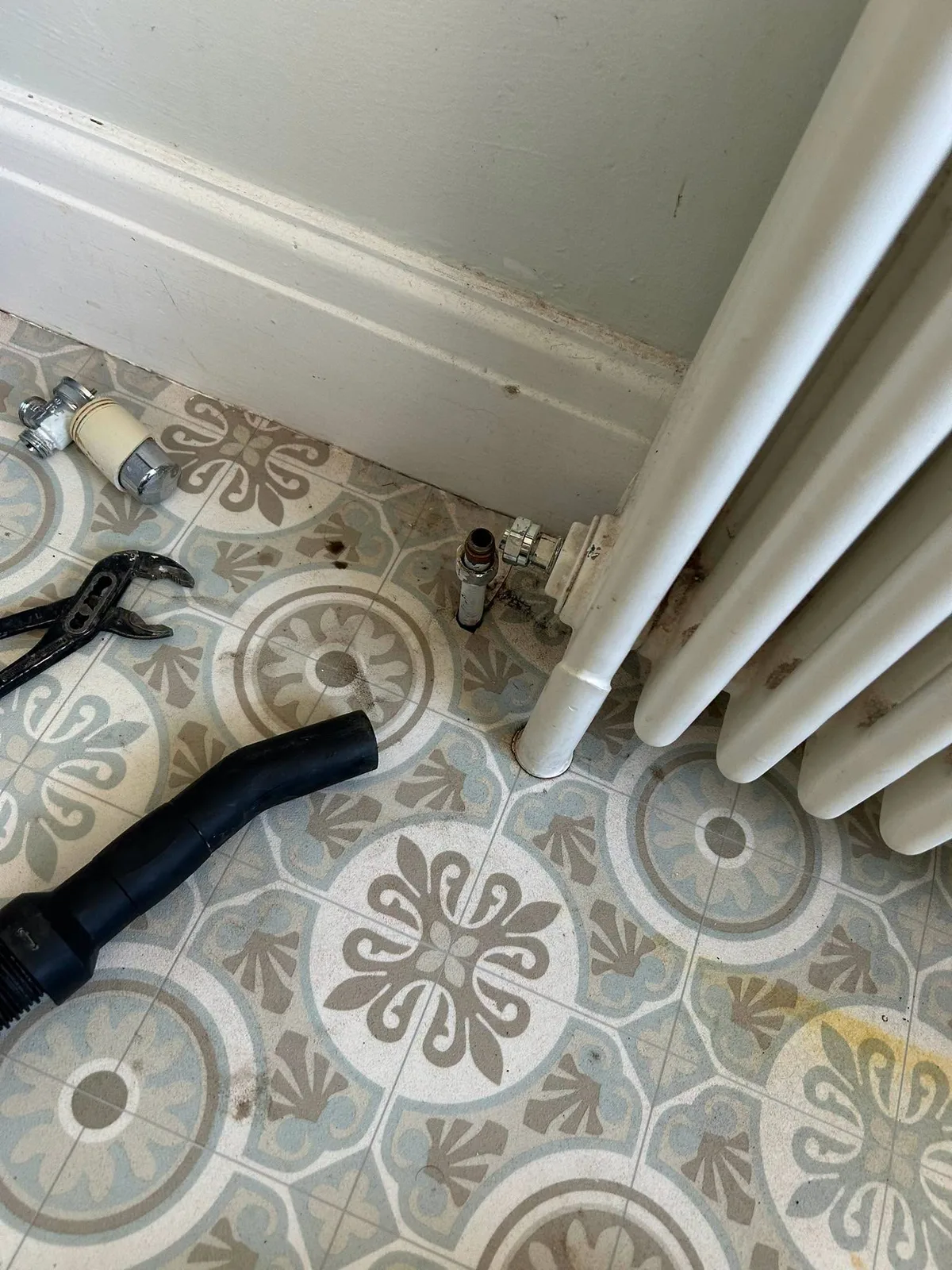
- I connect a power flush machine to your heating system, usually at the pump or a radiator
- Cleaning chemicals go in to break down sludge and scale
- Each radiator is flushed in turn, using the valves to direct the flow
- I keep flushing until the water runs clear from each radiator
- Fresh water and inhibitor go in to protect against future corrosion
- The magnetic filter is cleaned or fitted to catch any remaining debris
It takes 4-6 hours for a typical house. Larger properties or badly contaminated systems take longer.
Benefits of Power Flushing
After a power flush, you should notice:
- Radiators heat fully and evenly, with no cold spots
- Faster warm-up, so the house gets warm quicker
- A quieter boiler, without the banging, gurgling or kettling
- Lower gas bills, as an efficient system uses less fuel
- Fewer breakdowns, with less strain on boiler parts
- A valid warranty, as a flush is required before many new boiler installations
The difference is often noticeable straight away. Radiators that haven’t heated properly for years can start working as they should.
Power Flush Before New Boiler
If you’re getting a new boiler, I’ll usually recommend a power flush first. Here’s why.
New boilers have narrow waterways that clog easily. Old sludge from your existing system can damage a new boiler within months. Most manufacturers require a flush for the warranty to be valid.
It adds to the upfront cost, but it protects your new boiler and helps it last as long as it should.
Alternatives to Power Flushing
A power flush isn’t always the answer:
- Chemical flush - A cheaper option where chemicals sit in the system for a few weeks. Less effective than power flushing, but it can help in mild cases.
- Magnetic filter only - If contamination is light, fitting a magnetic filter may be enough from now on.
- System replacement - If the pipework is very old and corroded, flushing won’t help. Sometimes it’s better to re-pipe.
I’ll tell you honestly what your system needs. I don’t push power flushes when they’re not necessary.
Service Areas
I carry out power flushing across Middlesbrough, Stockton, Redcar, Thornaby, Guisborough, Billingham and surrounding areas.
Frequently Asked Questions
How long does a power flush take?
Usually 4-6 hours for an average 3-bed house. Larger properties or heavily contaminated systems may need a full day.
Will it definitely fix my cold radiators?
In most cases, yes. If radiators are cold because of sludge (the most common cause), a power flush should fix it. If the problem is something else (a faulty valve, an air lock, a pump issue), I’ll find that during the process.
How often should I power flush?
A properly maintained system with inhibitor and a magnetic filter shouldn’t need regular flushing. Once every 10-15 years is typical for a well-maintained system.
Can I stay in the house during the flush?
Yes, though I’ll need access to all the radiators and will need to turn the heating off during the process.
My boiler is old - should I still power flush?
If you’re keeping the boiler, a power flush can help. But if you’re replacing it soon anyway, save the money and have the flush done when the new boiler goes in.
Power Flushing Service Areas
Need Power Flushing?
Call or text me for a free, no-obligation quote.
- A fixed price before any work starts
- Free quotes, most of them by phone or message
- Gas Safe registered, number 972035
- Planned work Mon–Fri 8am–6pm, Sat 9am–4pm
Or email zak@hobdaysheating.com